 2020–2021
The brief: Merge the appsThe real problem: Make setup work
One app for every connected appliance
Every appliance had its own app. The real barrier was setting them up, and part of the fix sat in the hardware.
- Client
- Philips
- My role
- Lead UX Designer Coffee & Floorcare
- Period
- 2020–2021
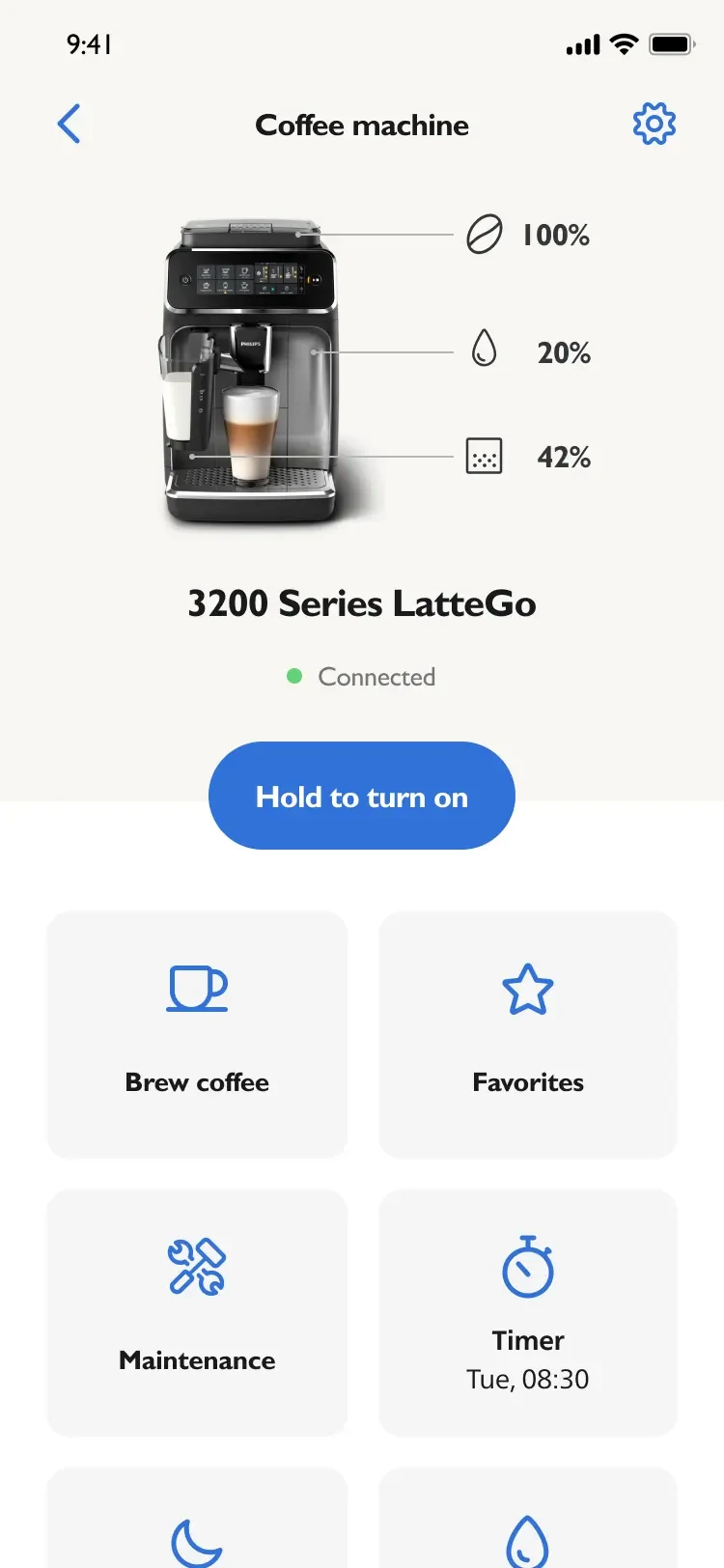
Connected product experience.
Details from the design, at reading size.
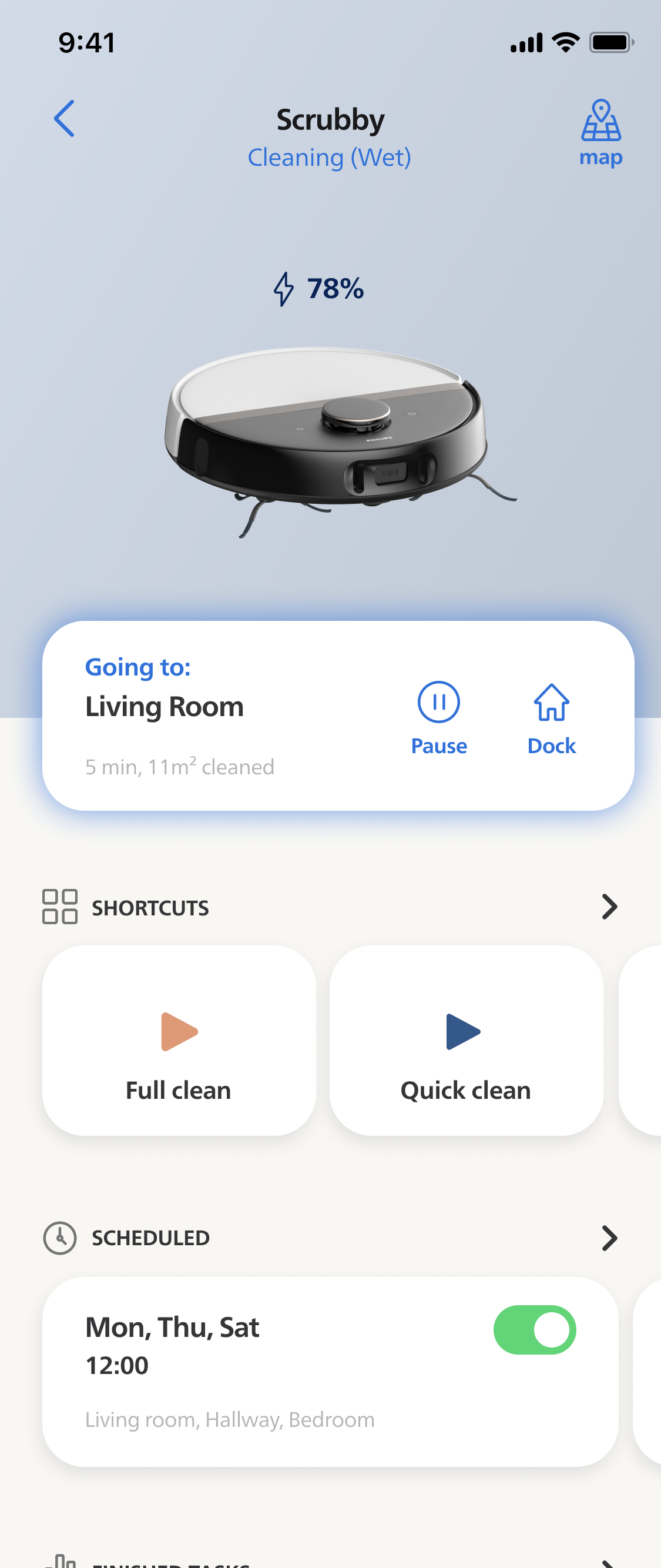
Status and control
The current destination, cleaning progress, pause and dock actions share one panel.
Everyday routines
Quick cleaning shortcuts sit above the scheduled cleaning controls.
The problem I was handed
Every connected Philips appliance came with its own app, each with its own design and its own way of getting started. The brief: one app where all connected devices come together, with one onboarding and setup process for every device, and room for appliances whose features could work together.
The problem that was actually there
The onboarding was more than inconsistent: it did not work well. Interviews kept coming back to the same moment, getting a new appliance connected. Many appliances had Wi‑Fi only, without Bluetooth, which made that first connection hard to get right.
That moment matters well beyond Philips: in a 2020 Parks Associates survey, 36% of US households that had returned a smart home device gave setup, installation or usage difficulties as the reason.
What I did
I designed the One app: one home for every connected appliance, and one onboarding and setup flow for all of them. Because part of the setup problem sat in the hardware, I also nudged the product teams towards boards with both Bluetooth and Wi‑Fi, so a new appliance becomes easier to onboard.
What came out of it
No single breakthrough. The work set the direction for the One app and one setup flow, along with a set of smaller findings. The clearest one: appliances with both Bluetooth and Wi‑Fi were far easier to install than Wi‑Fi-only ones, so I recommended combined chips for new appliances.
The industry went the same way. Matter, the smart home standard released in 2022, hands Wi‑Fi devices their network credentials over Bluetooth LE.
What this shows
Looking past the visible problem, many different apps, to the one that stops people at the door: setup. And following it into hardware decisions outside the design team’s own remit.