 2025–2026
The brief: Form is too longThe real problem: Unfair value exchange
Fair Exchange for IKEA Family
Signup looked like a form-length problem. It was fairness: the programme asked before it gave.
- Client
- IKEA Family
- My role
- Lead Service Designer
- Period
- 2025–2026
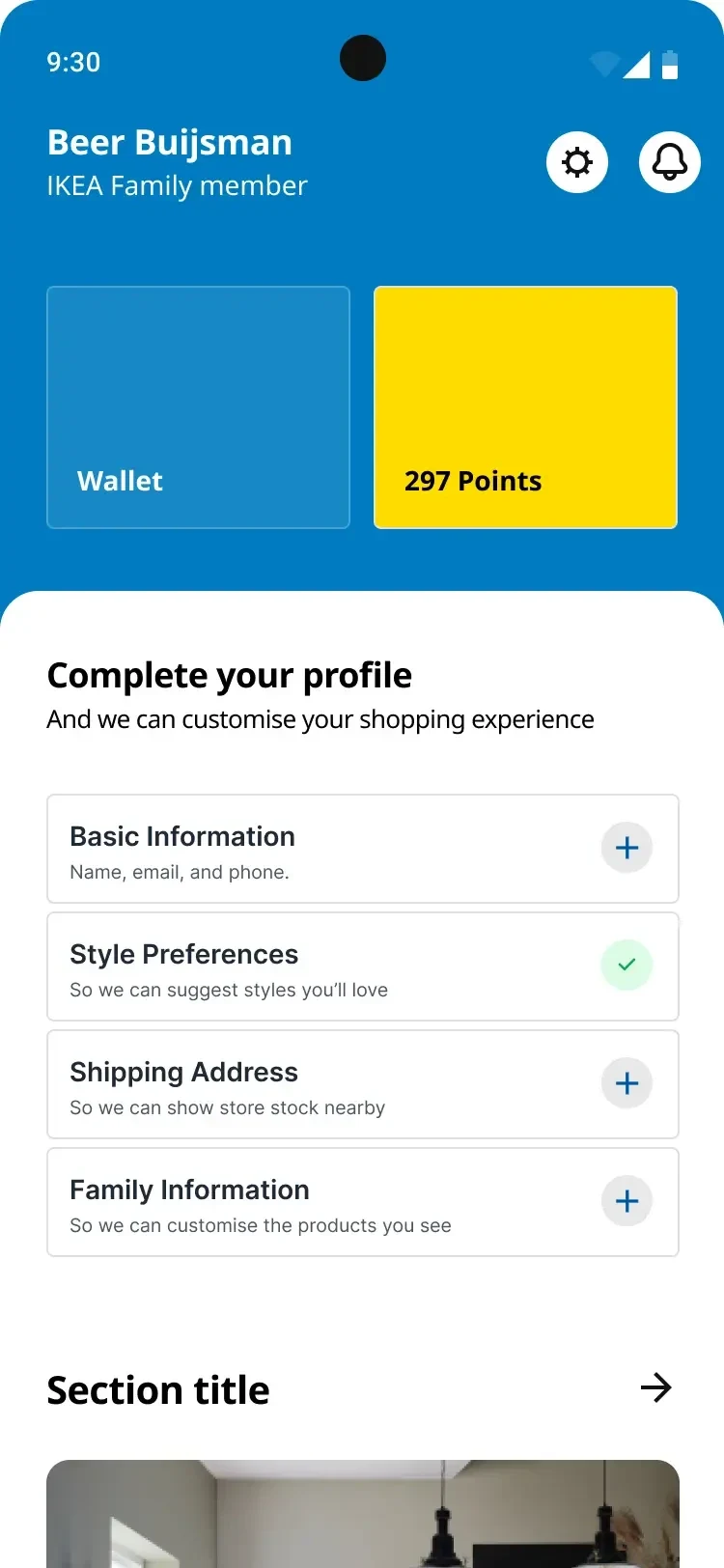
Membership experience.
Details from the design, at reading size.
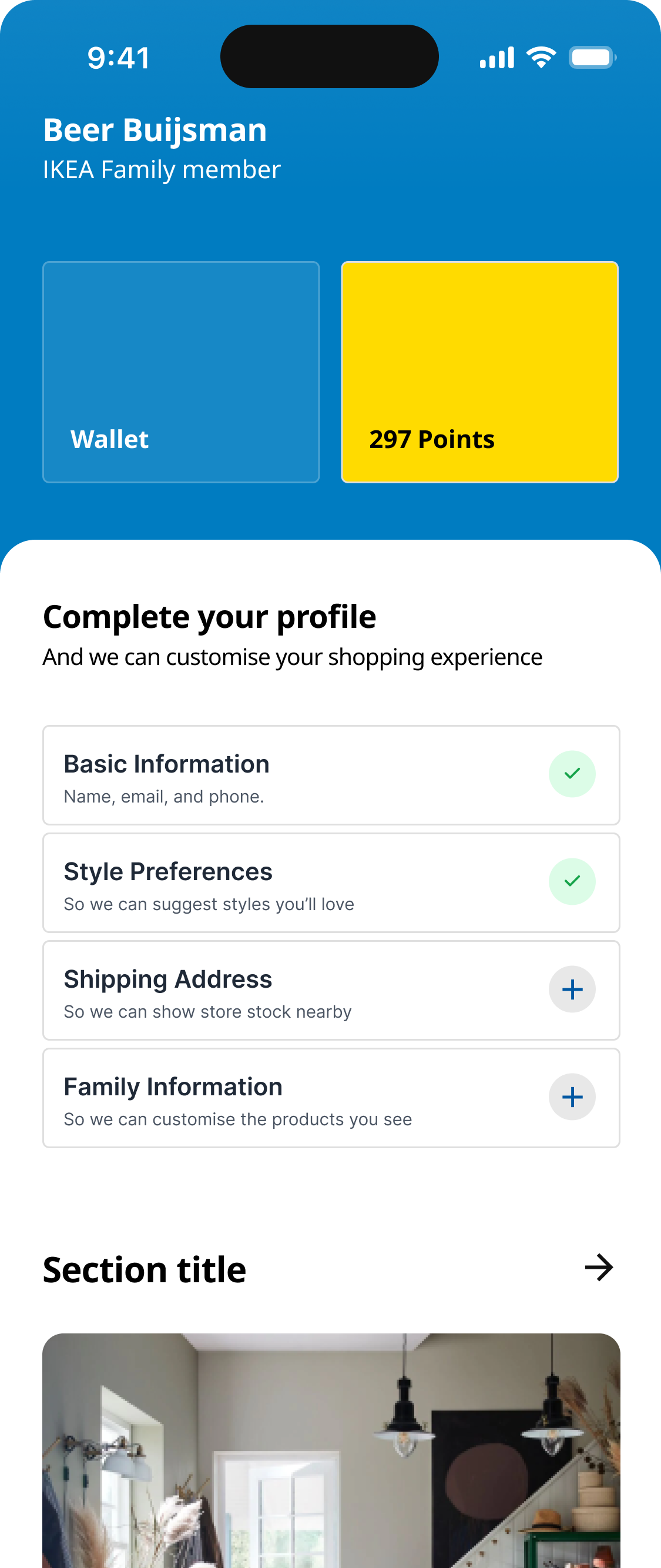
Membership in view
Wallet and points are grouped beneath the member’s name.
A reason to share
Profile fields explain the shopping benefit of adding each piece of information.
The problem I was handed
IKEA Family needed a coherent customer data strategy: understand what data the organisation actually held, redesign how it was collected, and rethink why membership was worth it. Three tracks, many stakeholders, one of the largest loyalty programmes in retail.
The problem that was actually there
Signup conversion looked like a form-length issue. The real blocker was fairness: members had no picture of what they gave versus what they got. The programme was asking before it was giving. Three reframes steered the work: sign-up is a moment of trust, not a marketing problem; data is borrowed and must be re-earned daily; loyalty is the memory of a relationship.
What I did
I audited the data landscape across eight silos and built the organisation's first shared taxonomy of what it held. On top of that I developed the Fair Exchange Principle: every piece of data IKEA holds must be worth more to the customer than to IKEA. Four pillars, benchmarked against the best loyalty programmes, and one test any stakeholder can apply: what does the member get back?
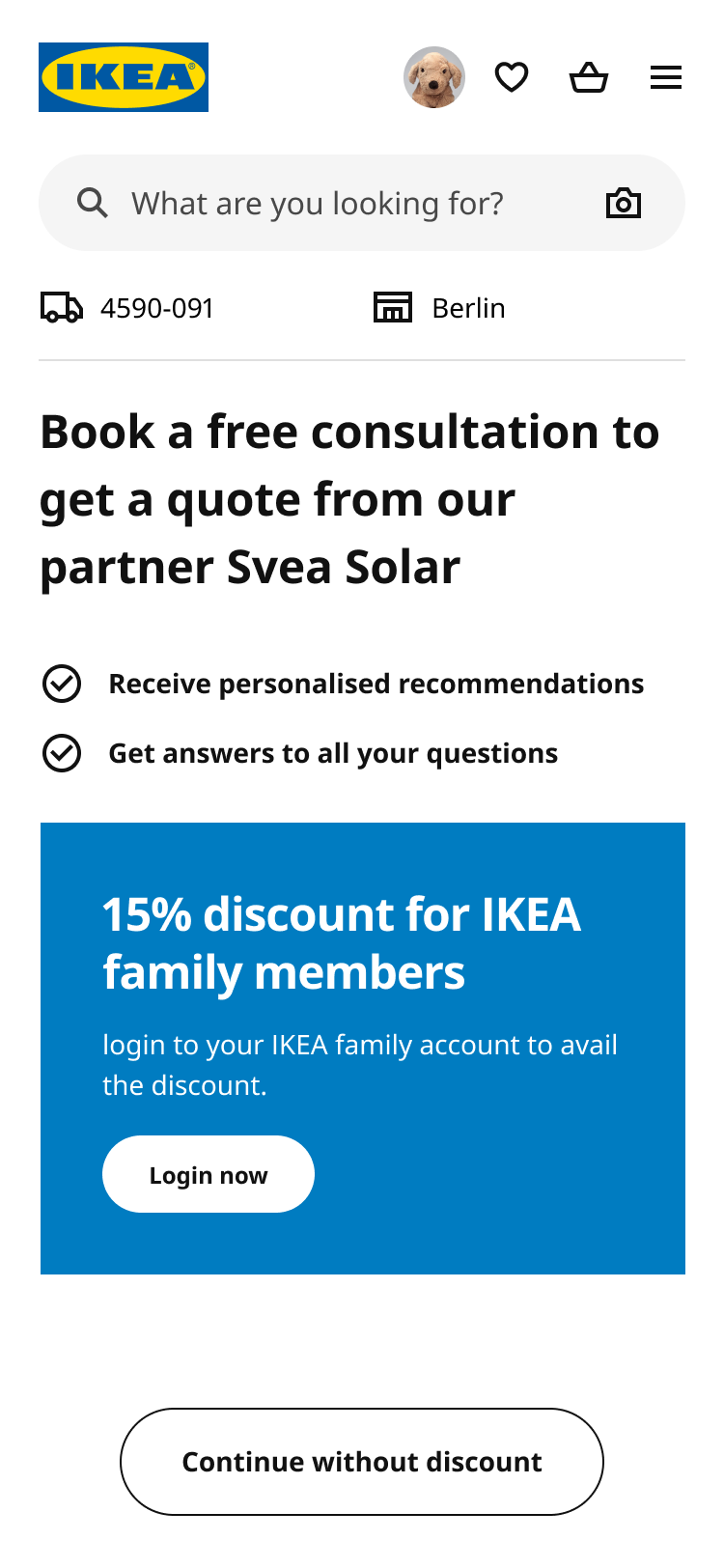
From there the tracks got concrete: dynamic signup forms that ask less upfront and earn the rest over time, a guest-to-member journey with a warm handover so progress carries into membership, a loyalty audit with an LTV model, and five gamification concepts scored against the principle, with an explicit avoid list. The test for that list: would a tired parent on a Sunday evening feel respected?
 View full size
 The result
A handover deck and file package built so a new team could act without me in the room: the principle with worked examples, the audit, the consent model, the friction inventory, the concepts, and an anonymised interview archive.
What this shows
Strategic framing at programme level. The Fair Exchange Principle and the Sunday-evening test turned scattered workstreams into decisions the organisation can still make without me. Warm handover belongs with that: guest progress has to survive signup, or the programme breaks the relationship at the moment it asks for commitment.