 2024–2025
The brief: One feed for allThe real problem: Familiarity first
One puzzle platform for all DPG brands
From concept to live in nine months. Now 150,000 daily users.
- Client
- Puzzelfit / DPG Media
- My role
- UX Lead Fun & Games
- Period
- 2024–2025
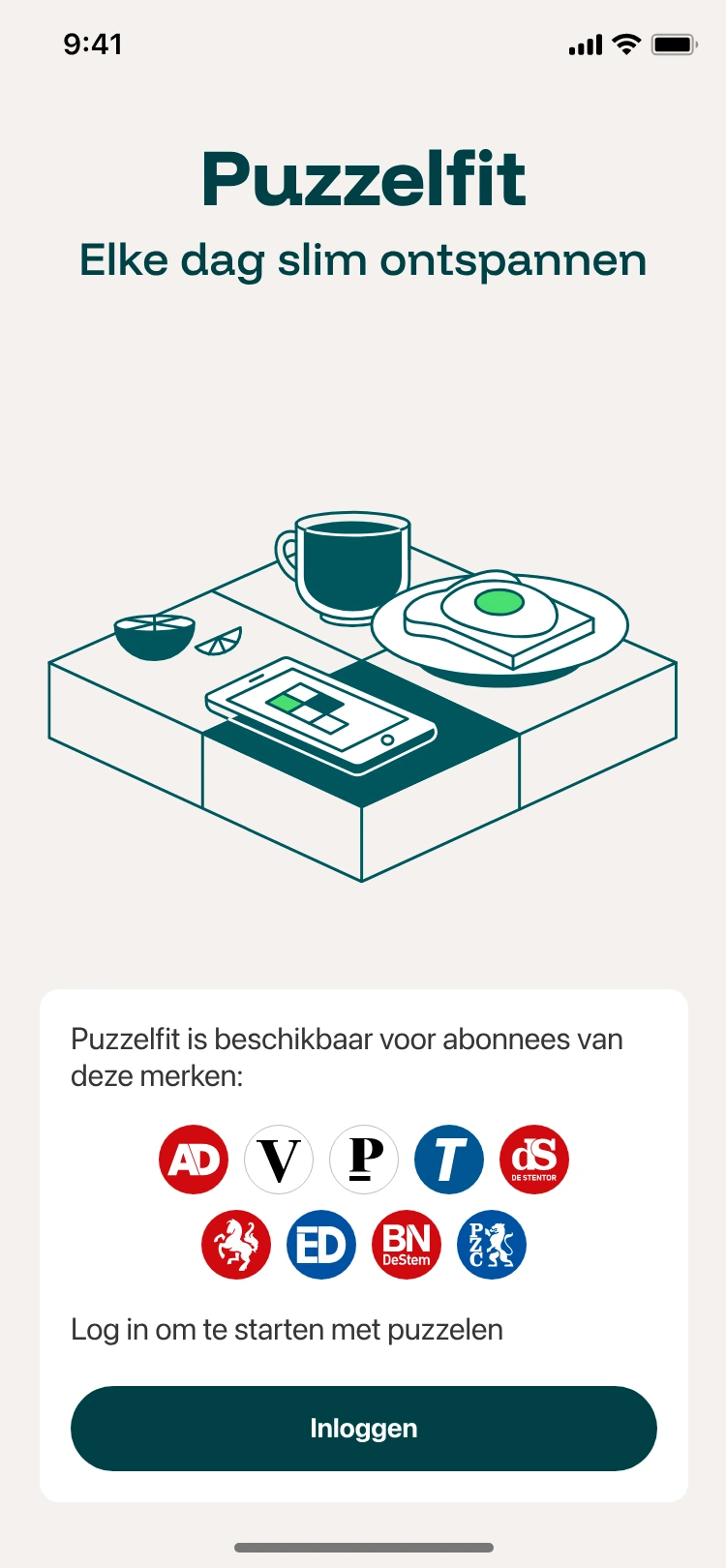
Puzzle onboarding.
Details from the design, at reading size.
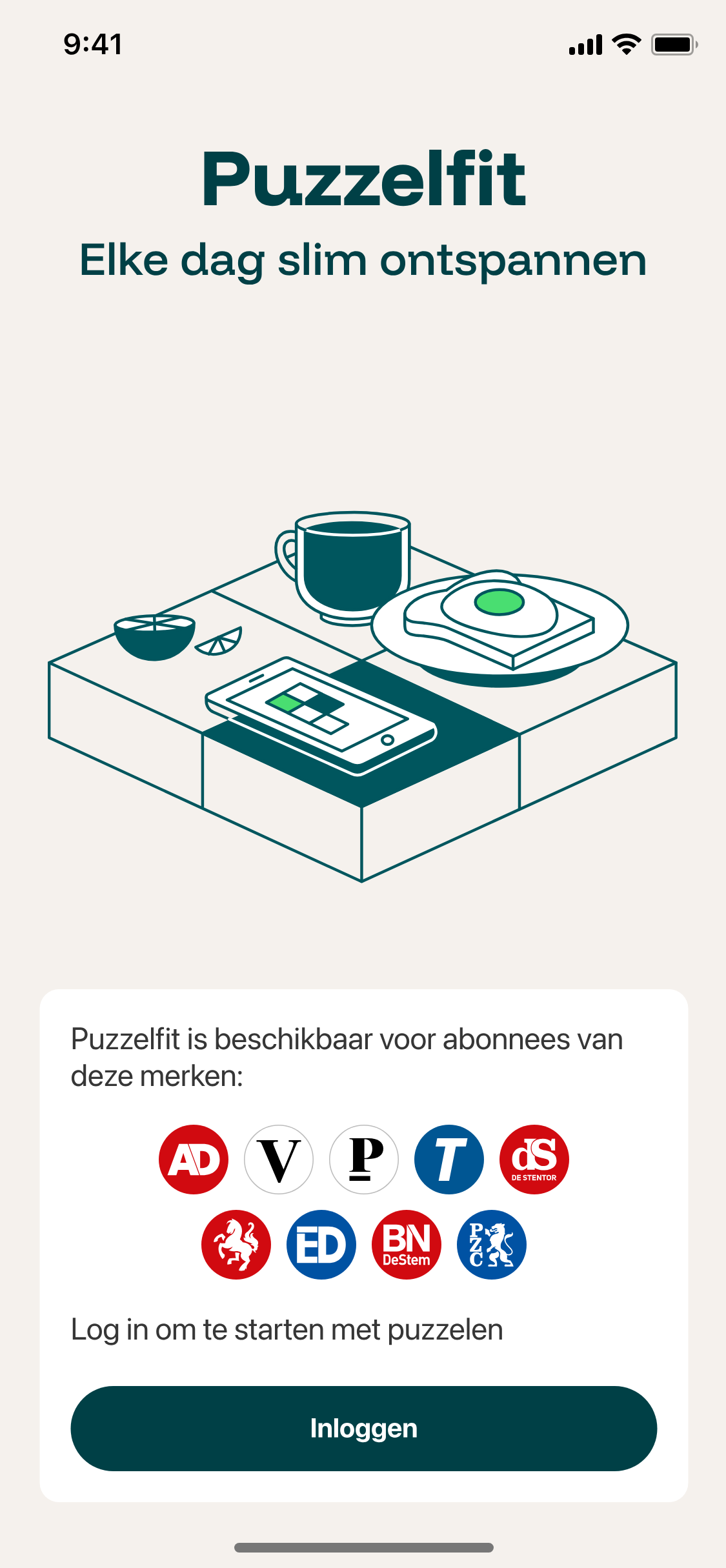
A moment to unwind
The breakfast illustration places the puzzle experience in an everyday routine.
Recognise your subscription
Publisher logos explain who has access, directly above the login action.
The problem I was handed
DPG Media's news brands each ran their own puzzle corner. The company wanted one platform for all of them, serving everyone from a six-year-old with a Donald Duck to a retiree with a Volkskrant subscription. Six brand organisations, editorial teams, marketing, product, and tech all had opinions. I pitched the approach to management myself and got sign-off before designing a single screen.
The problem that was actually there
Two audiences with opposite needs in one product. Free players puzzle to relax and are strongly attached to their fixed games; subscribers puzzle for challenge and often did not know how much puzzle content their subscription already included. Lead with discovery and you lose the first group; lead with the familiar and you bore the second.
What I did
Research first: 40+ interviews in three weeks, in three rounds with a synthesis after each, plus testing with more than twenty children under 14 recruited through schools and a nationwide call in the Donald Duck. The rounds produced the design's backbone: familiarity first, discovery one scroll away. The validated homefeed order became favourites, then bundles, then everything A to Z.
I designed the content model around subscription entitlements and built the white-label design system that carries it: one component library, brand icons for every DPG title, game states, premium labels, dark mode.
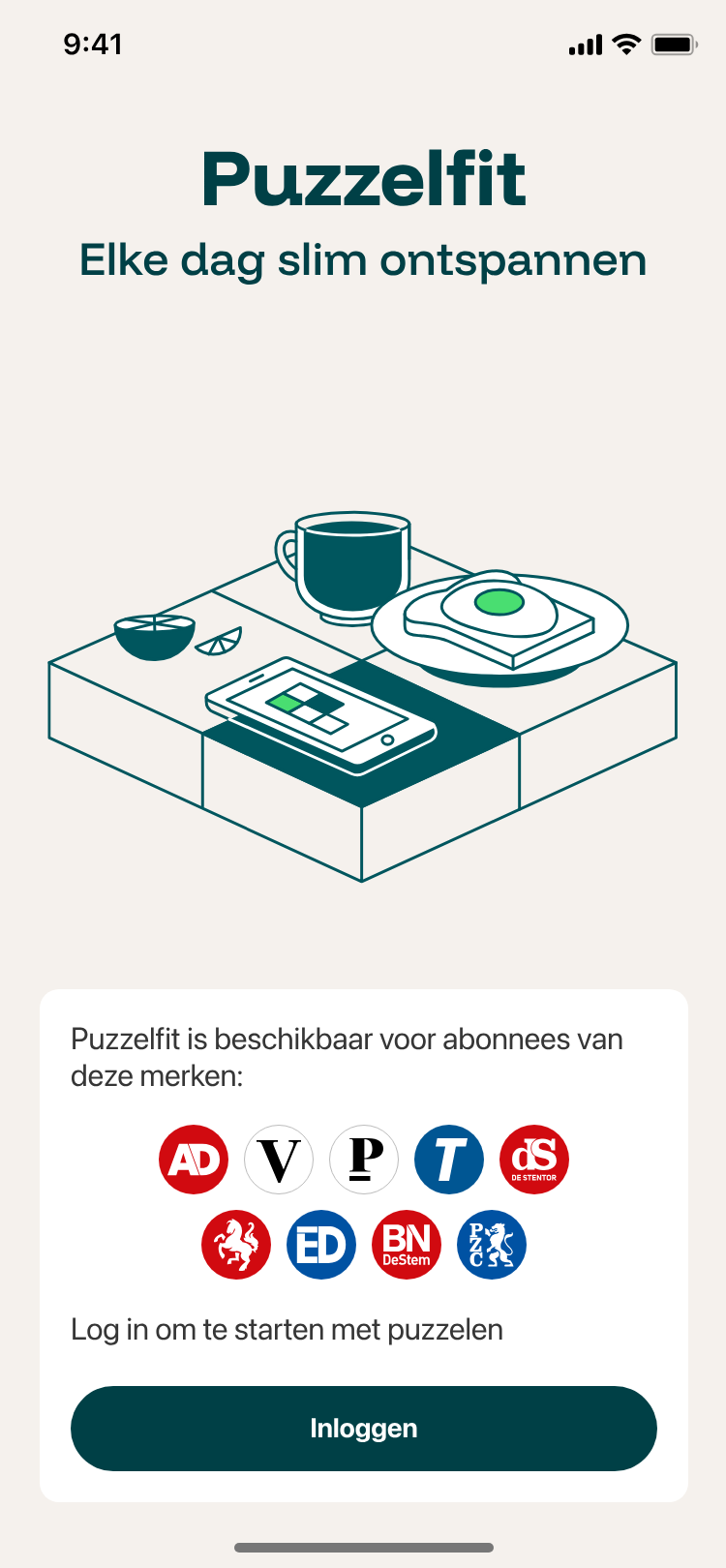 View full size
 The result
Concept to shipped product in nine months. The platform now serves 150,000 daily users across DPG's brands.
What this shows
The full arc: discovery, interviews, concept, design system, handover. And a structural pattern I keep coming back to: a publisher defines rights, the user only sees what applies to them, and the interface makes that feel like ownership rather than restriction.