 2023–2024
The brief: Redesign by tasteThe real problem: Quantify the leaks
Checkout, quantified and rebuilt
Checkout debates ran on seniority. I put a price on every friction point and the arguing stopped.
- Client
- adidas
- My role
- Lead Product Designer app
- Period
- 2023–2024
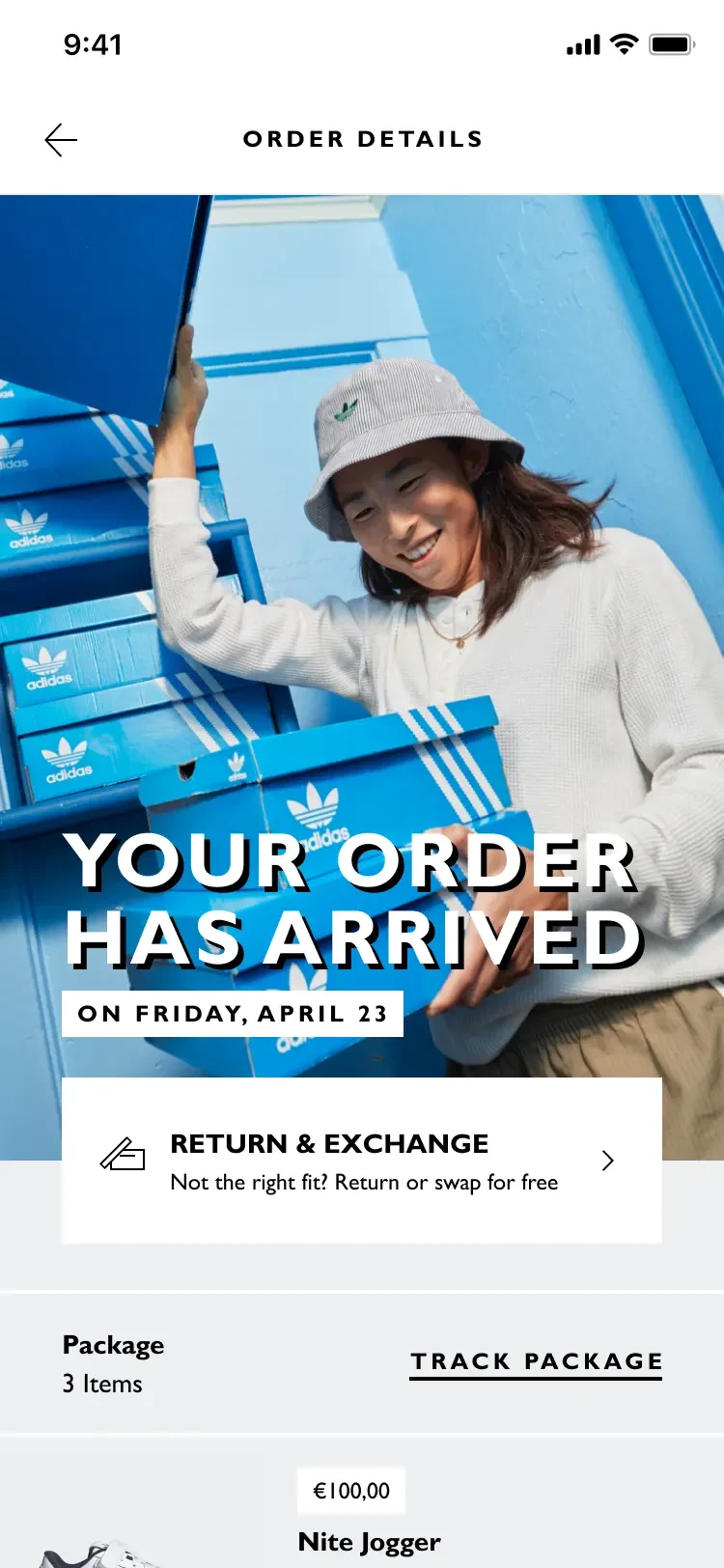
Shopping bag → checkout.
Details from the design, at reading size.
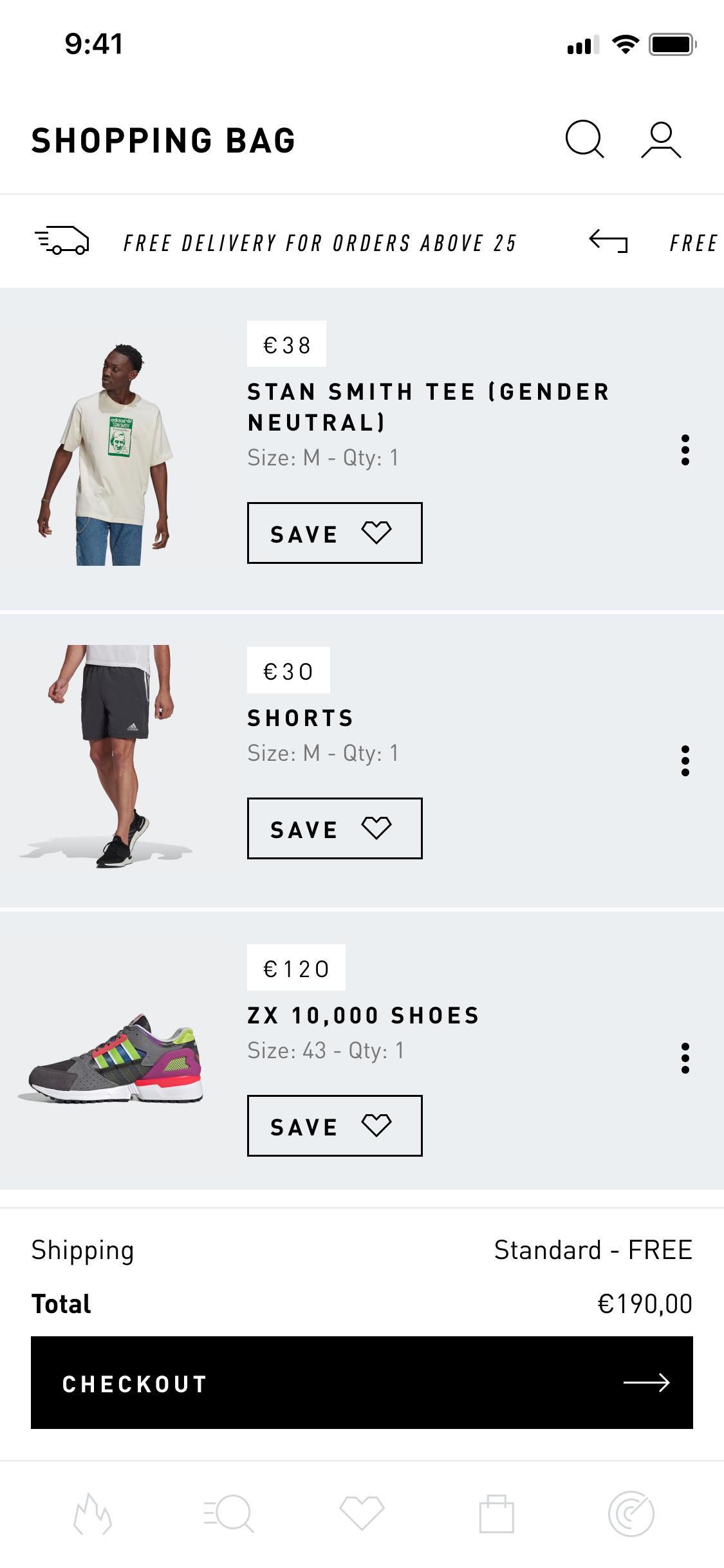
The item, at a glance
Product, price, size and quantity stay together, with the save action alongside the item.
A clear next step
Shipping and the total sit directly above checkout.
The problem I was handed
Redesign the order and checkout experience for the adidas app. Conversion was leaking and the flows carried serious payment volume.
The problem that was actually there
The team had opinions where it needed evidence. Checkout debates ran on taste and seniority because nobody had quantified where the experience actually broke, or what each leak cost.
What I did
Two instruments. First a heuristic evaluation, co-led with the design director: violations across the lower funnel, classified and mapped to exactly where the experience broke. Second a customer experience map of the full lower funnel, from discovery to unboxing, with the business impact of each friction point on the map itself. Once a design argument carried a business amount, prioritisation stopped being a matter of opinion.
Then the rebuild: the complete checkout, from shopping bag through payment, including every error state. Alongside it I wrote the department's Figma Playbook, documenting how the design team works from onboarding to handoff.
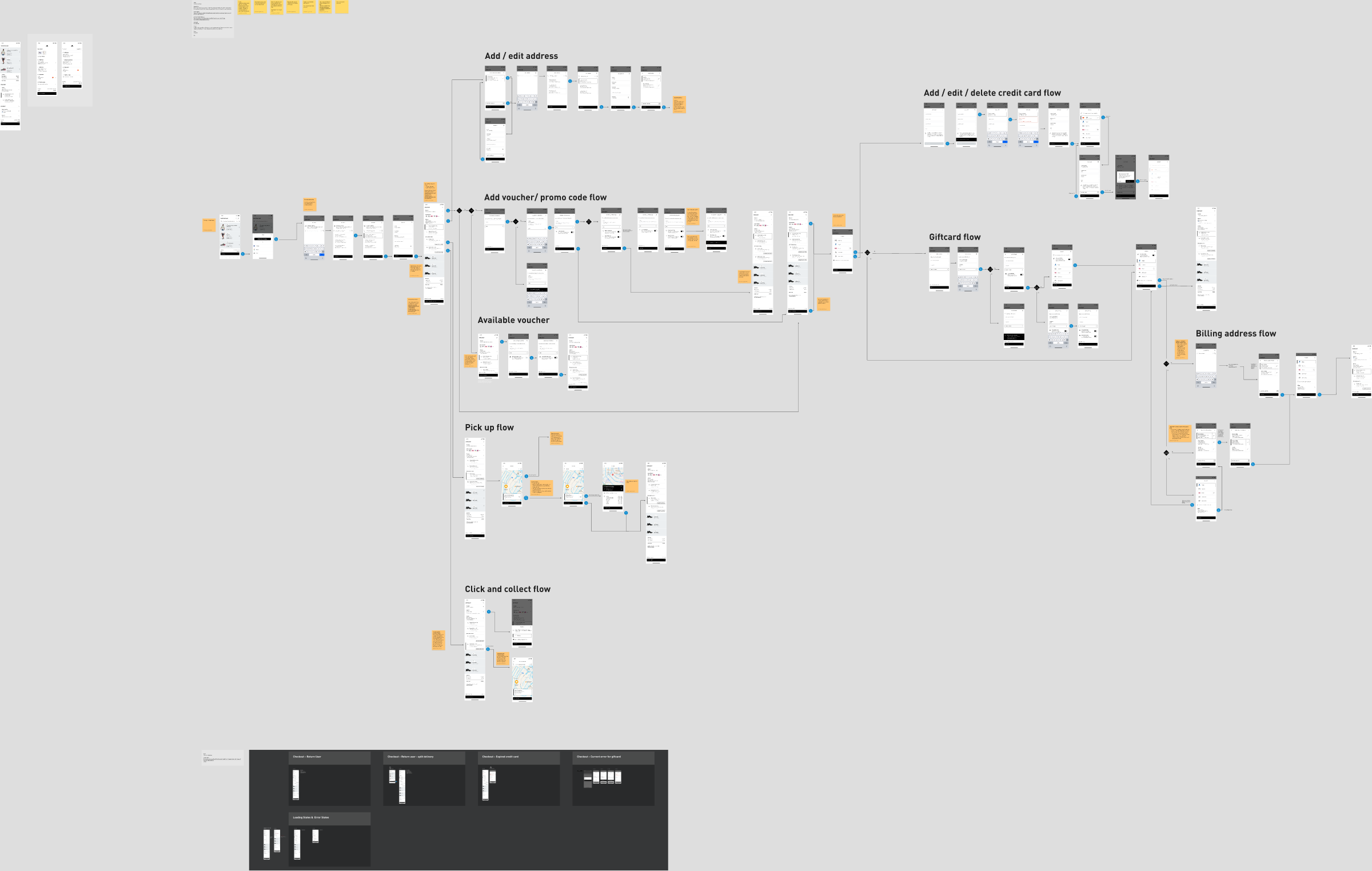 View full size
 The result
A/B validation proved the method out: the redesigned delivery options alone produced a measurable uplift. The playbook outlived the project as the department's way of working.
What this shows
Delivery craft at scale, not just concepts: a full checkout with every edge case designed. And evidence-led prioritisation that translates UX debt into business language.